Awards and jury
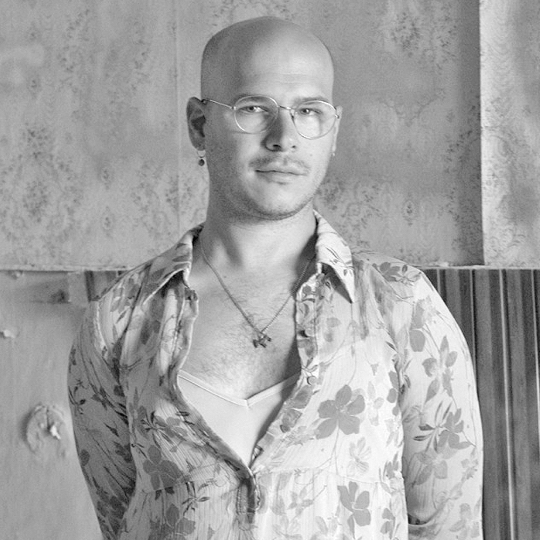
Juli Mesa
Juli Mesa (Arrecife, 1990) is a poet with a degree in Drawing from the Universitat Politècnica de València (UPV). Their creative work lies at the intersection of poetic writing and artistic sensitivity, exploring the expressive possibilities of language. Their first collection of poems, Soo (2023), was awarded the 1st Ana Santos Payán Prize for Poetry Book Projects and was published by La Bella Varsovia. They are also the author of Lucio Blanca (Fundación MAPFRE Canarias, 2023) and
1.& (LaDelfín, 2026).
Their work is included in various collective publications, including Criaturas laterales (Ediciones Poesía del Círculo de Bellas Artes, 2025), Poesía guarra (Disbauxa, 2025), and De alisios y volcanes: las nuevas voces atlánticas del siglo XXI (Instituto Canario de Desarrollo Cultural, 2025). Their literary output is part of a new generation of poetic voices from the Canary Islands.

Mariona Borrull
Mariona Borrull (they/them) is a film critic, journalist, lecturer, and film programmer. They write for Fotogramas and regularly contribute to outlets such as Gara, El Cultural, Kinótico, and the radio show Tot és Comèdia on SER Catalunya. In addition, they host Replicants, the 3Cat video podcast.
Their professional work combines film analysis with cultural outreach, bringing the different perspectives and expressions of contemporary cinema to the public. As a journalist, they have dedicated a substantial part of their career to covering top-tier
international film festivals such as Berlin, Cannes, and Venice. They balance this work with university teaching at the Universitat Oberta de Catalunya (UOC) and film programming for L’Alternativa, Barcelona Independent Film Festival. They are a member of the International Federation of Film
Critics (FIPRESCI) and serve on the board of the Feroz Awards. In 2022, they took part in the Berlinale Talents programme.
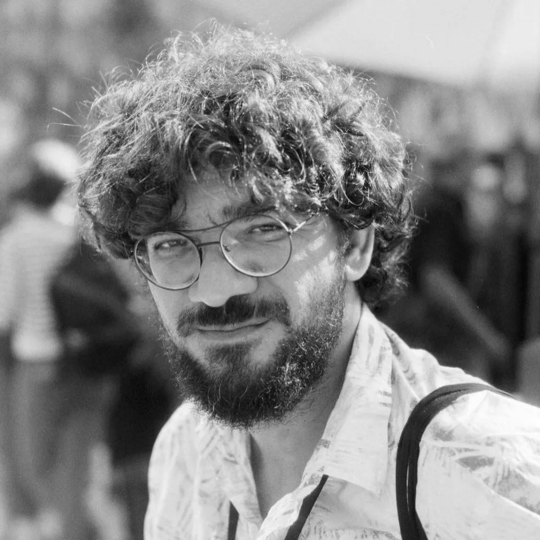
Victor Ribeiro Guimarães
Film critic, programmer, and lecturer based in Belo Horizonte, Brazil. Throughout his career, he has combined his teaching vocation with film analysis. His work extends well beyond the classroom, establishing him as an essential voice in understanding the diverse aesthetic, political, and narrative dimensions of contemporary cinema, thereby strengthening the bridge between films and audiences.
As an essayist, his work has a major international impact. Currently, he is a regular columnist for the Argentine outlet Con Los Ojos Abiertos. His writing has also appeared in globally acclaimed publications such as Cinética, Senses of Cinema, Kinoscope, Desistfilm, La Vida Útil, La Furia Umana, and the historic Cahiers du Cinéma. His work continues to enrich critical debate and the artistic appreciation of film worldwide.
Description
In 2018, following a decade marked by the severe economic crisis of 2008, its social fallout, and growing public discontent with institutions discredited by numerous corruption scandals, the Muestra de Cine de Lanzarote decided to challenge a long-standing convention across festivals worldwide: closed-door jury deliberations. Since then, the selection of the winning film in the Official Selection has taken place in front of an audience. It was not merely about altering a procedure, but
about embracing a deep-seated conviction: those who judge must be willing to explain the reasons for their verdict, to uphold it, and to reconsider it.
Yet merely opening the doors of a room was not enough. For the experience to take on genuine meaning, a meticulous—even rigorous—procedure was designed, one that has been refined over the years. Every member of the jury must address each and every film in competition, articulate their assessments, listen to those of their peers, and remain open to the possibility of altering their positions.
At a certain point, the audience is also invited to speak, and it has been compelling to witness how, on occasion, remarks made by attendees who had seen all—or nearly all—of the screenings have ultimately reshaped the criteria initially defended by the jury. This is no small achievement: listening means acknowledging that one’s own thinking can be enriched, and even revised, through the insights of others.
There is an element of spectacle to this experience, though not in any superficial sense. It is a spectacle of intelligence in action, where one takes pleasure in hearing an idea take shape, an interpretation be defended, or a moment of doubt prompt the reconsideration of a certainty. It is not about turning disagreement into theatre, but about making visible the effort required to judge. Because granting an award means singling out one film among others that are equally valuable, and that responsibility deserves far more than an unexplained verdict.
What is sought is a form of aesthetic justice: imperfect, perhaps, and open to debate, yet underpinned by collective reflection and attentiveness.
The Muestra de Cine takes immense pride in seeing this practice begin to resonate beyond Lanzarote. The Cosquín International Independent Film Festival in Argentina has incorporated this method of deliberation into its own programming. At a time when public discourse so often seems reduced to shouting, disparagement, imposition, or online posturing, championing respect, nuance, and reasoned argument takes on a value that extends far beyond cinema.
Description
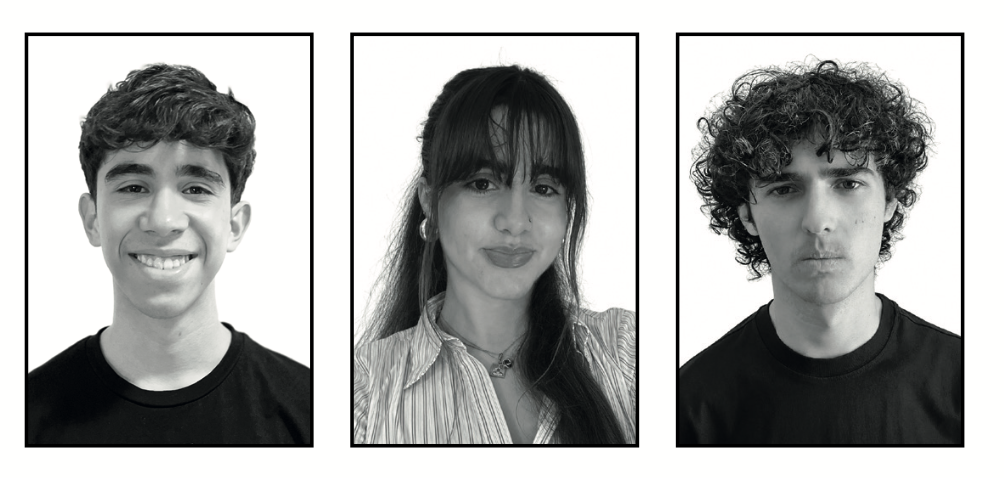
One of the most rewarding missions of any cultural initiative is to provide young people with experiences where they are not merely asked to listen, but also to think, debate, and decide. Driven by this conviction, the Muestra de Cine de Lanzarote, organised by Asociación Tenique Cultural, convenes a Youth Jury each year that takes on a concrete responsibility: evaluating the films in the Official Selection, choosing one of them, and publicly explaining the rationale behind their decision.
This exercise demands far more than voicing personal tastes. It requires examining cinematic proposals that, in many instances, diverge from mainstream conventions, finding words for what the films evoke, listening to diverse interpretations, and accepting that an opinion may evolve when a stronger argument arises. Much of the significance of this experience lies precisely in that transition from personal impression to reasoned judgement.
Awards
A single Best Film Award will be granted in the Official Selection, carrying a cash prize of €6,500 (six thousand five hundred euros), which may not be withheld. This amount is subject to any tax withholdings specified by the legislation in force at the time of payment, which are included in the prize allocation. The award will be divided into two shares: 75% will go to the individual(s) responsible for directing the film, and the remaining 25% will go to the film’s distribution company. In the event that any of these parties has assigned or delegated their collection rights by contract to a third party (production companies, agents, etc.), they must notify the Muestra de Cine organisation in writing regarding the existence of such a prior agreement. Payment of the prize will be issued during the first four months of the year.
The section Crossroads: Filmmakers of the Canary Islands is open to short films produced and/or shot in the Canary Islands, or directed by filmmakers who were born or reside in the Canary Islands. This eligibility criterion must be supported by documentary proof.
A short film is defined as any film with a running time of less than 30 minutes. This section is competitive and carries a prize of €1,200 (one thousand two hundred euros) for the individual(s) responsible for directing the best short film. This amount is subject to any tax withholdings specified by the legislation in force at the time of payment, which are included in the prize allocation.
The Jury for this section will be the same as that of the Official Selection, although its deliberations will be held behind closed doors.